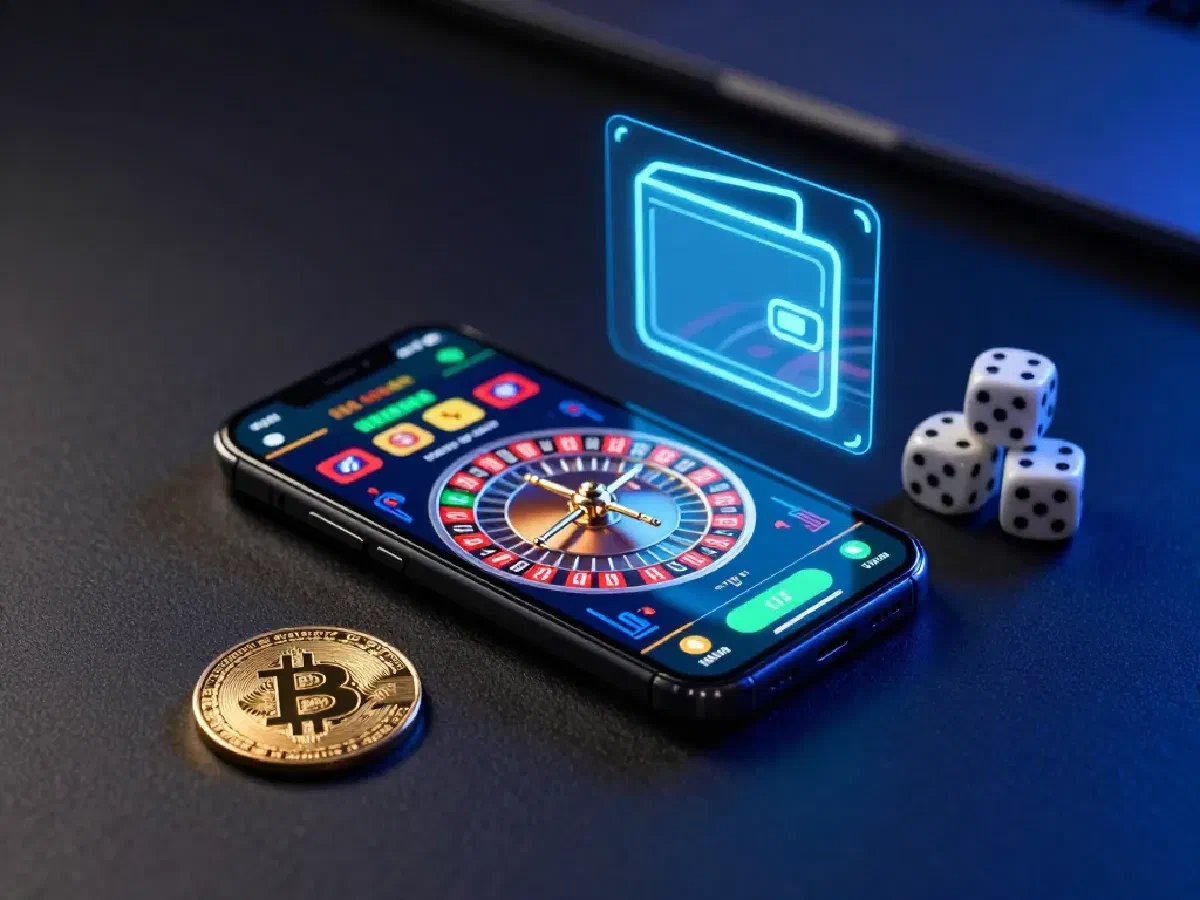
Stepping into a crypto casino can feel like learning a new language. Digital wallets, blockchain confirmations, and anonymous play replace the familiar buzz of traditional betting floors. Yet the appeal is hard to ignore: instant withdrawals, provably fair games, and total privacy. Think of this guide as your translation key. It cuts through the jargon and walks you through every essential step—from setting up your first crypto wallet to making that initial, nerve-wracking deposit. By the end, you won’t just grasp the mechanics. You’ll have the confidence to navigate any platform like a seasoned pro, ready to place your first bet without a single misstep.
Understanding the Legal Landscape Before You Play
Before you deposit a single satoshi, you need to understand that crypto gambling exists in a strange legal twilight. Unlike a traditional online casino that holds a license from Malta, Curaçao, or the UK Gambling Commission, a crypto casino often operates with no license at all—or one from a jurisdiction with minimal oversight. This isn’t automatically a red flag, but it changes your risk profile dramatically.
Checking Your Jurisdiction’s Gambling Laws
Your first move is not to browse casinos—it’s to open a browser tab for your own government’s gambling regulations. The legality of crypto gambling varies wildly: it’s fully prohibited in countries like the UK (for unlicensed operators), partially restricted in parts of the EU, and explicitly legal in places like Canada (outside of provincial monopolies) and many US states. Do not assume that because the casino accepts your IP address, it’s legal for you to play. Use a VPN to check the casino’s terms of service for geo-blocking lists, but more importantly, search your local laws for phrases like “remote gambling” and “crypto wagering.” If your country requires a domestic license for any form of online betting, playing at an offshore crypto casino could expose you to fines or, in extreme cases, asset seizure. When in doubt, consult a local attorney—a $100 to $200 consultation (from €90 to €180) is cheaper than losing a bank account.
Why Crypto Casinos Are Not Regulated Like Traditional Banks
Traditional banks are chartered, audited, and insured. They must comply with anti-money laundering (AML) laws, hold reserves, and answer to a central authority. Crypto casinos, by design, bypass most of this. They are not banks; they are software platforms that hold your funds in smart contracts or hot wallets. There is no “deposit insurance” to recover your money if the operator runs off with it. This means you must act as your own regulator: verify the casino’s provably fair system (which lets you mathematically confirm each bet’s outcome), check its on-chain wallet for liquidity (a healthy casino should show frequent large withdrawals), and read third-party audits on forums like Bitcointalk or Trustpilot—but treat reviews with skepticism, as many are paid.
Remember: No crypto casino is backed by a central bank or government deposit insurance. Your funds are only as safe as the casino’s reputation, your own security habits, and the blockchain network you use.
Practically, this means you should never keep a large balance on the platform. Deposit only what you intend to wager in the next session, and withdraw winnings immediately to your own cold wallet. Also, check the casino’s withdrawal limits and fees—some charge a network fee (from €0.50 to €5 per withdrawal depending on blockchain congestion) and impose daily caps. Treat the casino as a temporary exchange, not a savings account.
Setting Up Your First Crypto Wallet
Before you can deposit a single satoshi into a crypto casino, you need a secure place to store your funds while they’re not on the gaming floor. Think of your wallet not as a bank account, but as your personal keyring—it holds the cryptographic keys that prove ownership of your coins on the blockchain. For a beginner, the first decision is choosing between a software wallet and a hardware wallet.
Choosing Between a Software Wallet and a Hardware Wallet
A software wallet is an app you install on your phone or desktop. It’s the fastest route to your first deposit because it’s free, intuitive, and lets you send funds to the casino in under two minutes. Popular options include MetaMask (for Ethereum-based tokens) and Trust Wallet (for a multi-chain mix). The trade-off is that your private keys live on a device that’s connected to the internet, which means they’re exposed to malware or phishing attacks. For small, casual gambling budgets—say, anything under €200—a reputable software wallet is perfectly acceptable.
A hardware wallet, by contrast, is a physical USB device that keeps your private keys completely offline. Brands like Ledger and Trezor dominate this space. You plug it in only when you need to authorize a transaction, and the keys never leave the device. This is the gold standard for anyone planning to hold or wager larger sums—roughly €500 or more. The cost ranges from €60 to €150 per device, depending on the model and storage capacity. The downside is a slightly steeper learning curve: you’ll need to connect it to a companion app, and every transfer requires a physical button press. But for serious players, that extra friction is a feature, not a bug.
Securing Your Private Keys and Seed Phrase
Whichever wallet you pick, your real asset is the seed phrase—a 12- or 24-word recovery string generated when you first set up the wallet. This phrase can restore your entire wallet on any device, so losing it means losing your funds forever. Treat it like the combination to a vault. Here are the non-negotiable rules:
- Write your seed phrase on paper and store it offline. Use a fireproof safe or a safety deposit box. Do not store it in a notes app, a cloud drive, or an email draft.
- Never screenshot or type your private keys into a connected device. If your phone or computer is compromised, a screenshot is an instant theft. The private key is the raw code that authorizes spending; it should never exist in digital form.
- Use a unique, strong password for any wallet app. Don’t reuse your casino password or your email password. A password manager is fine, but a long, random string is better.
- Enable two-factor authentication where available. This adds an extra hurdle for anyone who somehow obtains your password. Use an authenticator app like Google Authenticator, not SMS, because SIM-swapping is a real threat.
Once your wallet is funded and secured, you’re ready to connect it to a casino. But that’s the next step—and the one where speed matters less than safety.
Funding Your Wallet with Cryptocurrency
Before you can place a single bet, you need to move value from the traditional banking world into the crypto ecosystem. This is a two-step process: acquiring digital coins, then transferring them to a wallet you control. Skipping either step properly is the most common way beginners lose money before they even play.
Buying Bitcoin or Ethereum from a Regulated Exchange
Your starting point is a centralized, regulated exchange—think Coinbase, Kraken, or Bitstamp if you’re in Europe or the US. These platforms comply with KYC (Know Your Customer) laws, meaning you’ll verify your identity with a passport or driver’s license. That friction is a feature, not a bug: it gives you legal recourse if something goes wrong.
Open an account, link a bank card or wire transfer, and buy either Bitcoin (BTC) or Ethereum (ETH). For casino play, Ethereum is often faster and cheaper to move, but Bitcoin is more universally accepted. As of 2026, you can expect to pay fees from €1.50 to €25 per purchase on a €100 order, depending on whether you use a bank transfer (cheaper) or a credit card (more expensive). The spread—the difference between the buy and sell price—typically adds another 0.5% to 1.5% on top. Always use a “limit order” if the exchange offers one, which lets you set your target price and avoids paying the instant-market premium.
Transferring Crypto from the Exchange to Your Personal Wallet
Never leave your coins on the exchange. Exchanges are prime hacking targets, and you don’t control the private keys—the password that proves ownership. Instead, withdraw your BTC or ETH to a personal wallet. For beginners, a non-custodial software wallet like Exodus or Trust Wallet is a solid middle ground: free, easy to install on your phone, and you hold the keys. For larger amounts (over €500), consider a hardware wallet like Ledger or Trezor, costing from €60 to €150 per device.
In your wallet app, find your receiving address—a long string of letters and numbers, often shown as a QR code. On the exchange, select “Withdraw,” paste that address, and choose the correct network. This is critical: Bitcoin runs on the Bitcoin network, Ethereum on the ERC-20 network. Sending Ethereum over the wrong network can destroy your funds. Withdrawal fees from exchanges range from €1 to €8 for Bitcoin and €0.50 to €4 for Ethereum, depending on network congestion.
Always send a small test transaction first (e.g., a few dollars) to confirm the correct address. Blockchain transactions are irreversible—one typo can permanently lose your funds.
Once the test arrives in your wallet (usually within 5–30 minutes), you’re ready to fund the casino.
Choosing a Licensed and Reputable Crypto Casino
Before you connect a wallet or send a single satoshi, your first task is separating legitimate operators from fly-by-night outfits. The crypto gambling space is still the Wild West compared to traditional online casinos. A few minutes of due diligence here can save you from losing your entire bankroll to a rigged game or an exit scam. Start with the license. A reputable casino will display its license number and regulatory body in the footer of its website. Look for recognition from Curaçao (the most common for crypto-first sites), Malta Gaming Authority (MGA), or the UK Gambling Commission (UKGC) for stricter oversight. A license isn’t a guarantee of fair play, but it does mean the operator is subject to audits, dispute resolution, and anti-money-laundering checks. If you see no license at all—or a made-up-sounding regulator—walk away immediately.
Next, cross-reference the casino’s reputation on independent review sites and forums like BitcoinTalk or Reddit’s r/CryptoGambling. Pay special attention to threads about withdrawal delays or “phantom” denials where the casino refuses to pay out without clear justification. A pattern of complaints about frozen funds is a massive red flag, regardless of how slick the website looks. Also, check how long the casino has been operating. A site that’s survived three or more years with consistent payouts is far more trustworthy than a brand-new platform offering ridiculous bonuses.
Before you deposit, read the fine print—specifically bonus terms and withdrawal limits. Wagering requirements are where most beginners get burned. A 35x requirement on a 100% deposit bonus means you must wager 35 times the bonus amount (plus often the deposit) before withdrawing any winnings. If the requirement is 50x or higher, the bonus is almost never worth claiming; you’ll likely lose your deposit before clearing it. Also, check the maximum cash-out per transaction. Some casinos cap weekly withdrawals at 1 BTC or €10,000—fine for casual players, but a low cap could lock a jackpot in limbo for months. Finally, confirm the casino supports your specific cryptocurrency and wallet type. Some only accept ERC-20 tokens, others prefer Lightning Network, and a few still rely on slow, high-fee Bitcoin transactions. If you plan to use a hardware wallet, ensure the casino’s deposit addresses are compatible. Taking these steps isn’t paranoid; it’s the difference between gambling for fun and gambling for loss.
Making Your First Deposit Safely
Generating the Casino’s Deposit Address
Before you send a single satoshi, you need a precise destination. Every crypto casino operates with a deposit system built on public blockchain addresses—long strings of alphanumeric characters that function like a bank account number. Unlike a traditional bank, though, these addresses aren’t permanent. Most reputable platforms generate a fresh, unique deposit address for each user, and often for each individual transaction. This security feature protects your privacy and prevents tracking across the blockchain.
To generate your address, log into your casino account and head to the “Cashier,” “Wallet,” or “Deposit” section. Pick the cryptocurrency you plan to use—Bitcoin, Ethereum, Litecoin, and USDT are the most common. The platform will then show a QR code and a text string. Here’s the critical part: copy that address directly from the secure dashboard. Don’t type it manually, and never pull an old address from a previous email, chat log, or screenshot. If the casino displays a “memo,” “tag,” or “destination tag” field (common with XRP or EOS), copy that too—it’s just as essential as the address itself for the funds to land correctly.
Sending Funds and Confirming the Transaction on the Blockchain
Once your address is copied, open your personal crypto wallet—the one you control, not the casino’s. Initiate a withdrawal to the casino’s address. Paste the copied address into the recipient field, double-checking every character against the dashboard. Then set the network fee. This is where beginners often trip up. Choose a low fee, and your transaction may sit unconfirmed for hours. For Bitcoin, a reasonable fee in 2026 ranges from roughly $1.50 to $8 per transaction, depending on network congestion. For Ethereum or ERC-20 tokens, expect gas fees from $2 to $15. For Litecoin or Tron, fees are negligible—often under $0.50. Skip the “economy” setting for a first deposit; a standard or priority fee ensures faster confirmation.
After you hit send, your wallet will provide a transaction ID (a hash). Don’t close the wallet. Open a block explorer (like Blockchain.com for BTC or Etherscan for ETH), paste your transaction ID, and watch the confirmation count. Most casinos require between 1 and 3 confirmations for smaller deposits, but larger amounts may demand more. Once the network confirms the transaction, the casino’s system credits your balance—usually within a few minutes. If it takes longer than 30 minutes, don’t panic. Check the transaction status on the block explorer first; if it’s confirmed but not credited, contact support with your transaction ID.
Deposit addresses are unique per user and per transaction on many platforms. Always copy the address directly from the casino’s secure dashboard, and never reuse an address from an old email or chat message.
Understanding Provably Fair Games and House Edge
Before you place your first bet with Bitcoin or Ethereum, you need to understand two concepts that separate legitimate crypto casinos from shady operations: provable fairness and the house edge. These aren’t just marketing buzzwords—they’re the mathematical backbone of your entire playing experience. Let’s break them down so you can play with confidence, not blind faith.
How Cryptographic Hashing Verifies Game Outcomes
In a traditional online casino, you have to trust that the random number generator (RNG) isn’t rigged. A crypto casino built on provably fair technology removes that trust barrier entirely. Here’s how it works in plain English. Before a round begins, the casino generates a server seed—a secret string of characters—and combines it with your client seed, which you can change, and a nonce, a counter that increments with each bet. These three inputs are hashed, run through a cryptographic algorithm like SHA-256, to produce the game’s outcome. After the round ends, the casino reveals the original server seed, allowing you to independently re-run the hash and confirm the result wasn’t tampered with mid-game. This means every spin, card deal, or dice roll is verifiable by you in seconds. If the casino tries to change the outcome after you bet, the hash won’t match, and you’ll know instantly. The golden rule is simple: never trust a game that doesn’t offer a verification mechanism. If a casino won’t show you the seeds and nonce, they’re hiding something.
Interpreting House Edge and Return-to-Player Percentages
Provable fairness tells you the game is honest, but it doesn’t tell you if the game is worth playing. That’s where the house edge and Return to Player (RTP) come in. The house edge is the casino’s built-in mathematical advantage—the percentage of every bet the casino expects to keep over the long run. For example, a game with a 2% house edge means that for every $100 wagered, the casino theoretically keeps $2, and you get $98 back in winnings. Lower is always better for you. Blackjack with perfect strategy often has a house edge below 1%, while many slots hover between 3% and 5%. RTP is simply the flip side of the same coin: it’s the theoretical percentage returned to players over many plays. An RTP of 97% means the game returns $97 for every $100 bet over a massive sample size. But here’s the critical nuance: RTP is a long-term average, not a promise for your next 10 spins. You can hit a winning streak on a 94% RTP slot, or lose your bankroll on a 99% RTP game. The key is to look for games with a house edge below 2% if you want a fighting chance, and always check the provably fair verification before you commit a single satoshi.
Withdrawing Your Winnings and Handling KYC
You’ve placed your bets, the dice have rolled in your favor, and your balance is looking healthy. Now comes the moment that separates a casual player from a savvy one: getting your crypto out. Many beginners stumble here—not due to bad luck, but because they misunderstand the final gatekeeper: identity verification.
The Identity Verification Process for Withdrawals
Even if deposits are pseudonymous, most licensed casinos require KYC (Know Your Customer) before paying out. Be prepared to upload a government ID, proof of address, and possibly a selfie. This is standard, not a scam. The process typically unfolds in three steps: you initiate a withdrawal, the casino freezes the request, and their compliance team reviews your documents. Expect to provide a clear photo of your passport or driver’s license, a utility bill or bank statement dated within the last three months, and a live selfie or a photo of you holding your ID. The entire review usually takes anywhere from 15 minutes to 48 hours, depending on the casino’s volume and whether your documents are instantly machine-readable. Do not try using a VPN or a friend’s address—this flags your account for manual review and can delay payouts by a week or more. A practical tip: complete your KYC before you gamble, not after. Many casinos allow pre-verification, so when you hit “withdraw,” the funds move instantly instead of waiting in limbo.
Managing Network Fees and Processing Times
Your winnings are never truly “free” until they land in your wallet, and network fees will take a small bite. When withdrawing, you’ll usually choose between a few blockchain networks. For Bitcoin, expect a fee ranging from $1.50 to $8.00 per transaction, depending on network congestion. For Ethereum, gas fees are notoriously volatile, typically running from $2.50 to $15.00 per transfer. The cheapest and fastest option is usually a Layer-2 network like Arbitrum or Polygon, where fees hover between $0.05 and $0.50. Processing times vary: internal casino transfers are instant, but blockchain confirmations add 10 to 60 minutes for Bitcoin, 2 to 5 minutes for Ethereum, and under a minute for Solana. One critical rule: always send a small test transaction (e.g., $5) before moving your full balance to a cold wallet. This confirms you’ve copied the correct address and avoids the irreversible loss of your entire payout. Also, be wary of casinos that advertise “zero withdrawal fees”—they often build the cost into a worse exchange rate or require a minimum withdrawal of 0.01 BTC (roughly €500 to €900), which is far too high for a beginner’s first cash-out.
Responsible Gambling and Crypto Volatility
Crypto gambling carries a double-edged sword. You’re wagering on games of chance, but you’re also holding an asset whose value can swing wildly by the hour. That’s why responsible gambling here isn’t just about discipline—it’s about survival. Before your first deposit, two pillars matter.
Setting Deposit Limits and Time Boundaries
Decide your absolute ceiling before you even open a casino tab. Most reputable crypto casinos let you set daily, weekly, or monthly deposit limits in the settings menu. Use it. This isn’t a suggestion; it’s a firewall. A fixed limit forces you to treat gambling as entertainment spending, not an investment strategy. Pair that with a time boundary: set a timer for 30 or 60 minutes and stop when it rings, whether you’re up or down. The house edge compounds with every click, so the longer you play, the more the math works against you. If you’re chasing losses or playing past your limit, most platforms offer self-exclusion tools—cooling-off periods from 24 hours to permanent bans. Use them without shame. They exist because even seasoned players need a brake pedal.
Protecting Your Bankroll from Price Swings
Here’s the trap that catches most beginners: you win 0.05 BTC, feel like a genius, and then Bitcoin drops 10% overnight. Your “profit” just evaporated in fiat terms. So track your crypto’s value in dollars or euros, not just in coin units. A winning bet in Bitcoin may still lose purchasing power if BTC tanks while your chips are still on the table. The practical fix: convert your winnings to a stablecoin (USDT, USDC) immediately after each session, or withdraw to your wallet in fiat if the casino allows it. Never leave your entire bankroll in a volatile asset on a casino platform—that’s double exposure to both game risk and market risk.
Fund your bankroll only with money you can afford to lose entirely. Never gamble money needed for rent, food, or bills. If you wouldn’t burn that cash in a fireplace, don’t put it on a blackjack hand. A good rule of thumb: your total crypto gambling bankroll should be no more than 1–2% of your monthly disposable income. And if you’re using a credit card to buy crypto for gambling, stop—that debt is a noose.
Finally, remember that crypto casinos operate 24/7 with no closing time. The volatility of your asset is already enough stress; don’t add emotional volatility to the mix. Set your limits, convert to stablecoins, and walk away when the timer rings. The casino will always be there tomorrow. Your bank account might not be.
Conclusion
Starting your crypto casino journey doesn’t require technical genius. It just means following a simple sequence: pick a licensed platform, set up a non-custodial wallet, buy a small amount of a stablecoin or Bitcoin, and make your first deposit with a clear budget in mind. The real takeaway? Discipline matters more than luck. Treat your initial deposit as an entertainment expense, not an investment, and always verify the casino’s withdrawal rules before you play. Your next step is simple. Choose one reputable casino from a comparison site, create an account, and fund it with no more than you can afford to lose. Then play only low-house-edge games like blackjack or dice to stretch your bankroll. Once you’ve made that first deposit, you’ll realize the hardest part was just getting started. Every subsequent session becomes easier to manage.